
This is part 2 of findings from a Marquette Law School poll released Sept. 16, 2026. Part 1 covered the generic ballot, turnout and the images of the parties. Here I turn to Trump’s standing with voters and what the public sees as the most important problems.
Trump approval in second term
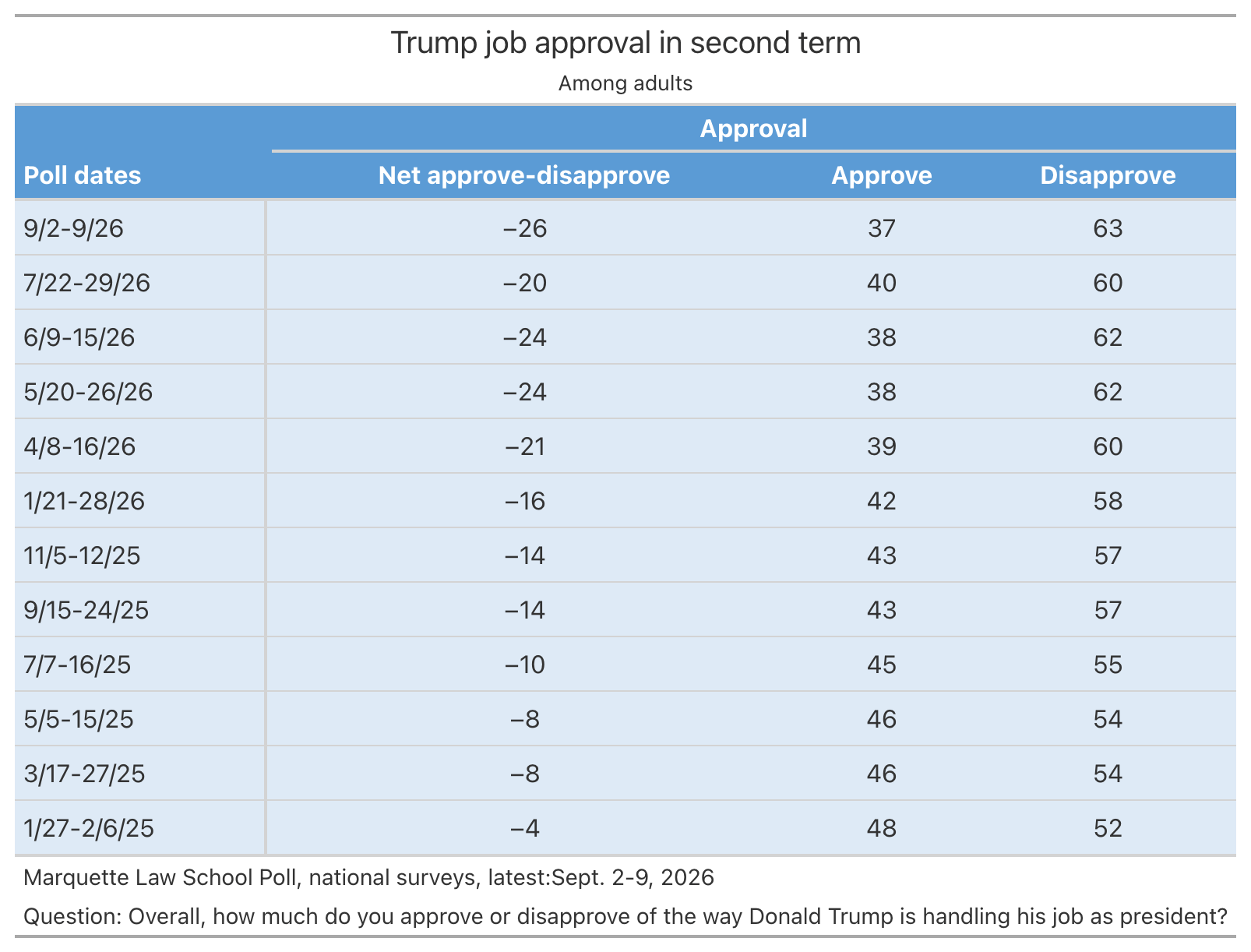
Approval of how Trump is handling his job as president declined in September to 37%, with 63% who disapprove. That is down from 40% approval in July, and a percentage point below the previous low of 38% approval in May and June. The course of approval has been downward since the start of Trump’s second term, when 48% approved and 52% disapproved. This trajectory has not been marked by dramatic or sudden drops. The steadiness of the decline from poll to poll has been notable, with approval falling by 0 to 3 points across successive polls, with the exception of a 2-point increase in the July 2026 poll. While successive changes have been small, the cumulative decline is substantial.
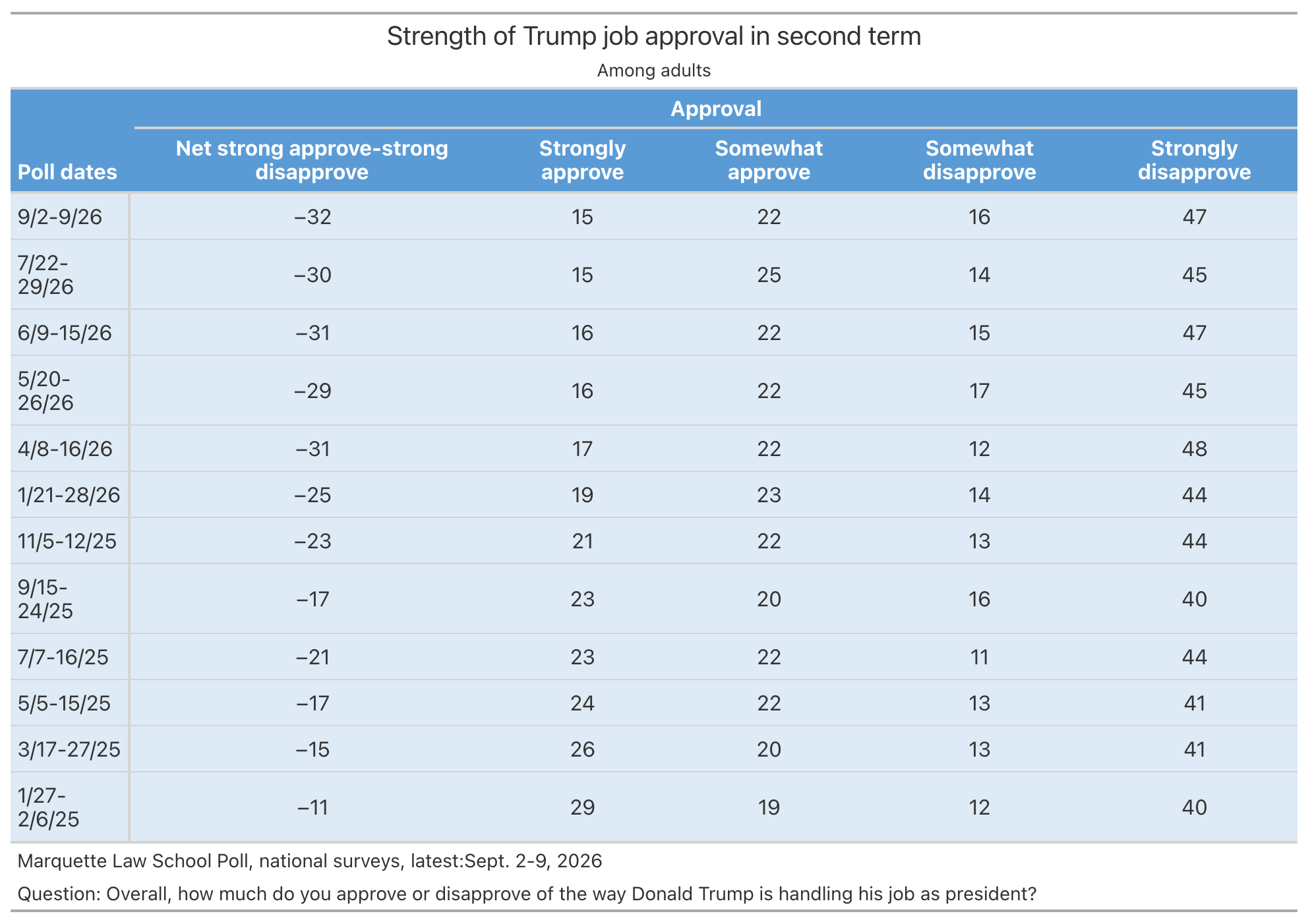
The strength of approval of Trump has also shifted over the second term. A substantial share of adults has strongly disapproved of Trump throughout 2025 and 2026, ranging from 40% in February 2025 to the current 47%. More change is seen in the balance of those who strongly approve and those who somewhat approve. Strong approval outweighed somewhat approval by 29% to 19% in February 2025, but as of September 2026, this is reversed, with 22% somewhat approving and just 15% strongly approving. This is a drop of almost half in strong approval since February 2025.
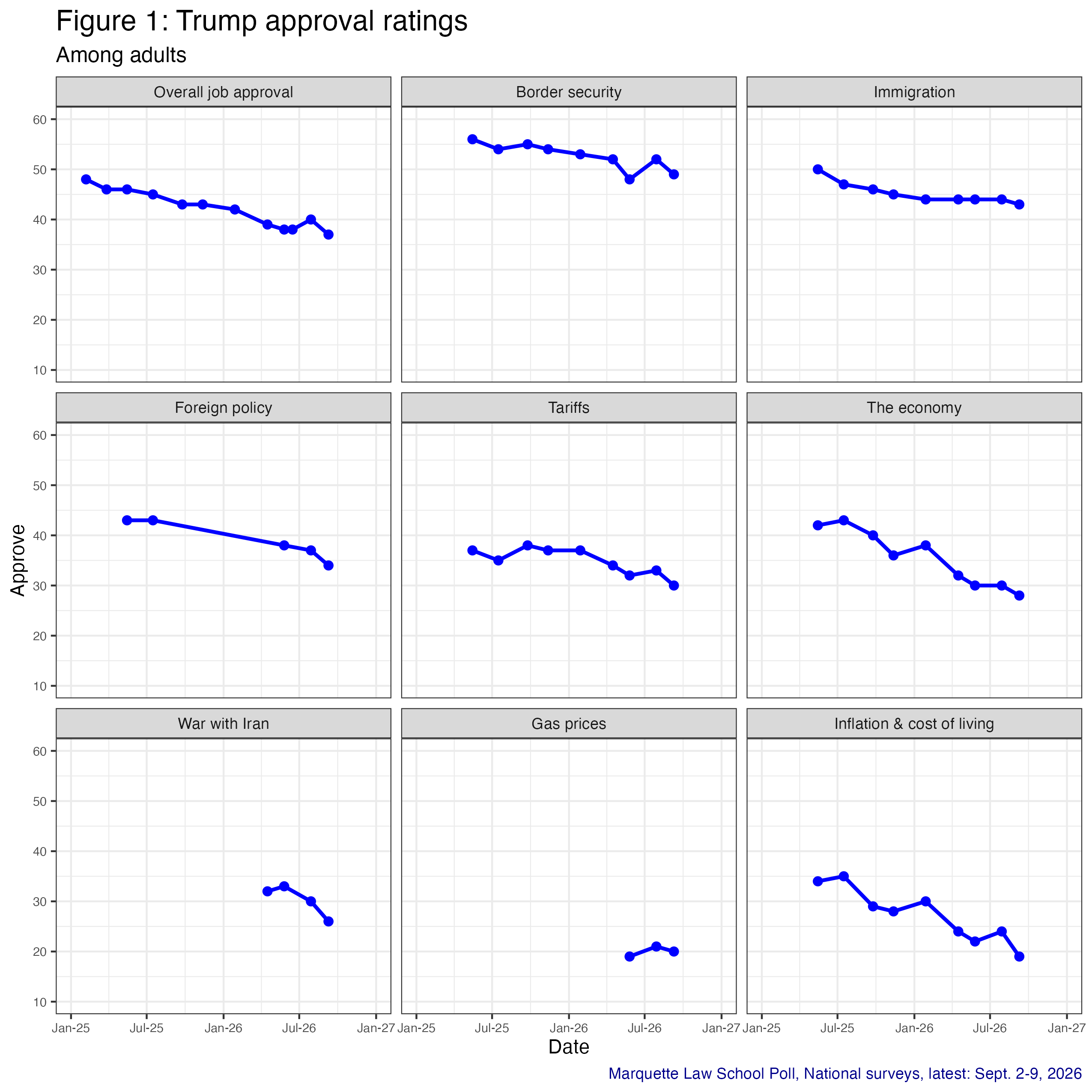
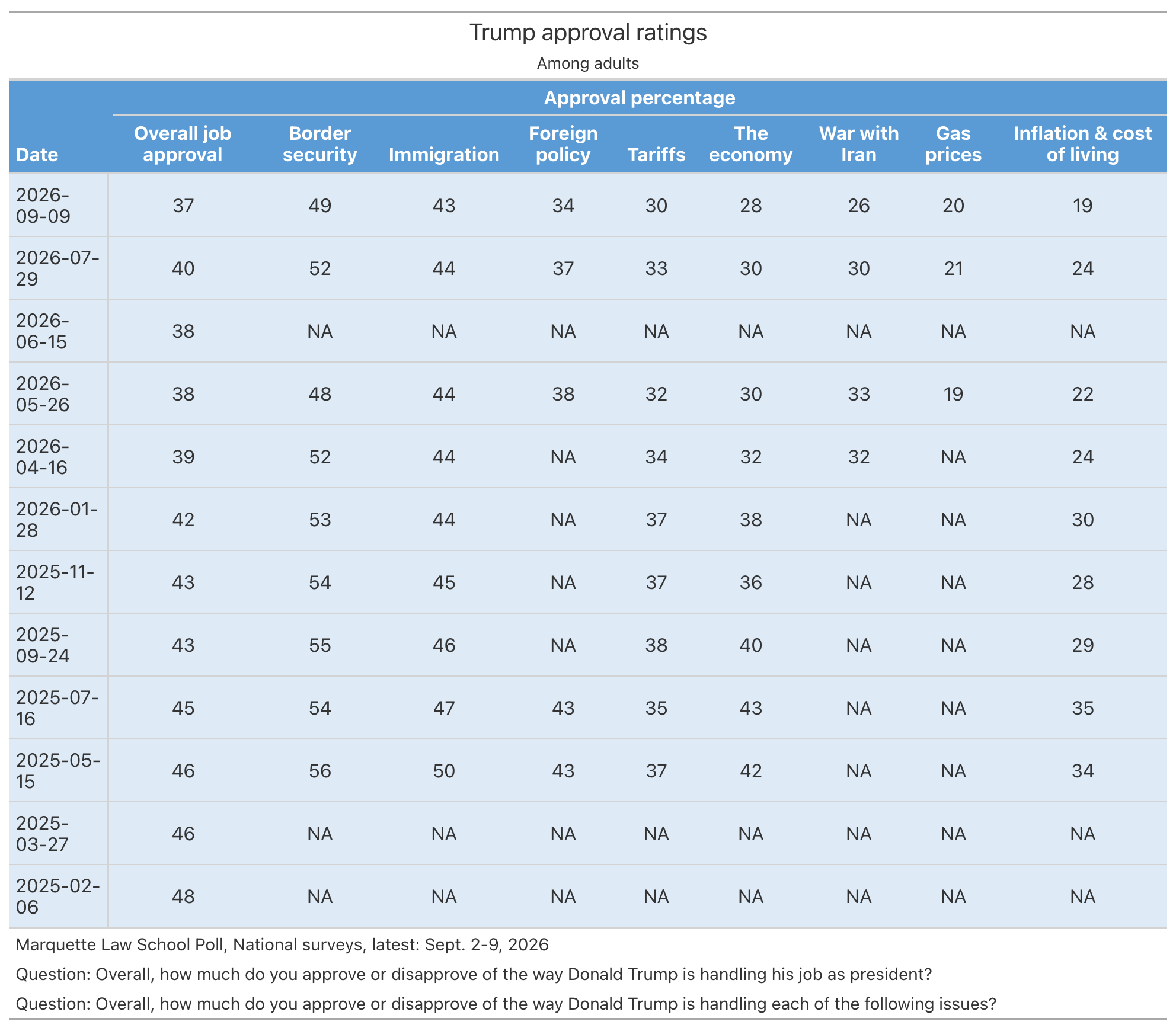
Approval of Trump varies substantially across issues, with his highest approval rating, 49%, for his handling of border security, and 43% approval on the issue of immigration. Each of the other six issues measured has approval ratings below 35%, with overall approval at 37%. Approval is especially low for the economy, war with Iran, gas prices, and inflation and the cost of living, each of which has approval below 30%. While approval on border security and on immigration each has remained relatively stable, approval on other issues has seen significant decline over time. Approval of the war with Iran has declined from 32% in April to 26% now.
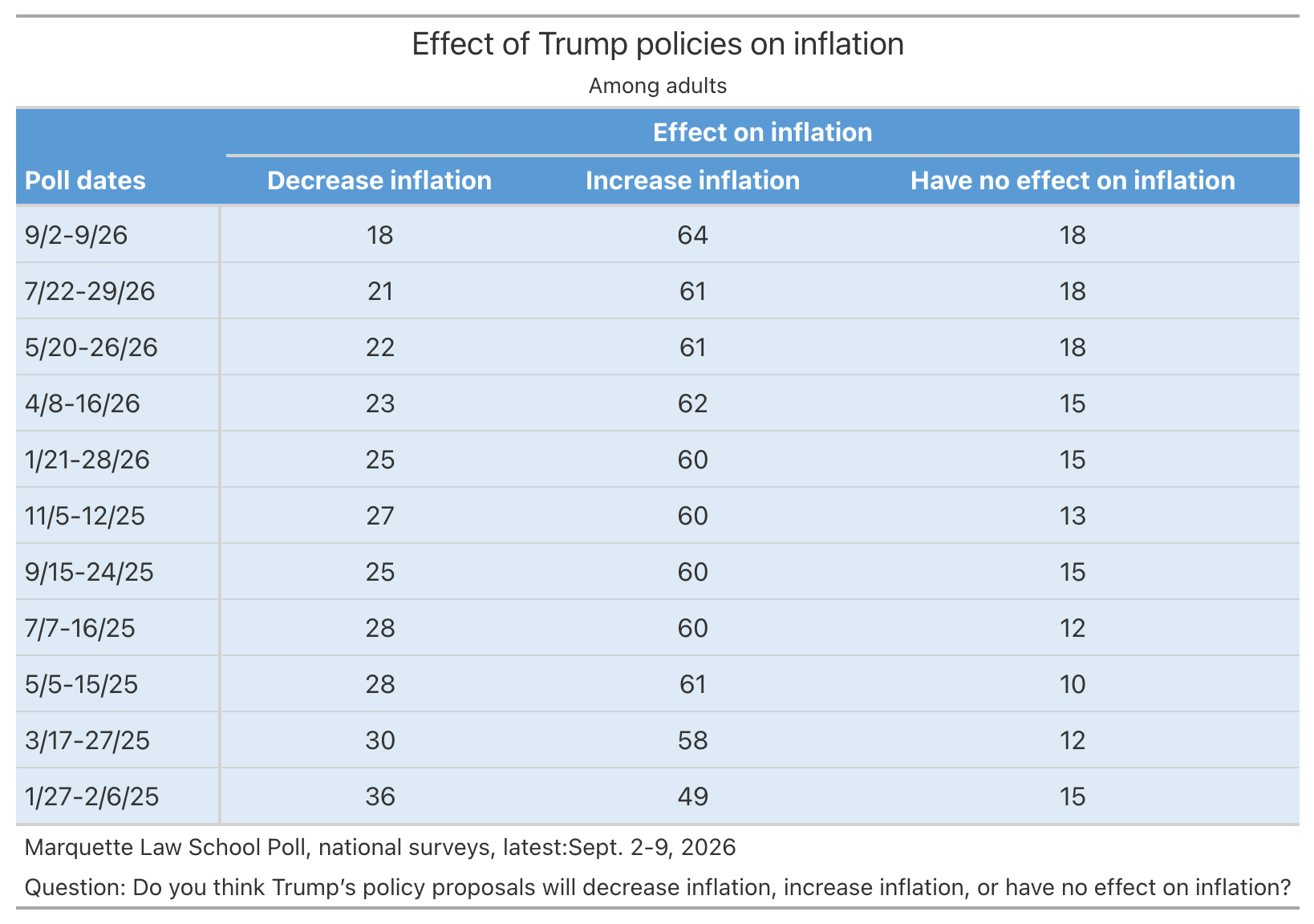
Americans are especially negative on Trump’s handling of inflation and the cost of living, with just 19% approving. A substantial 64% say his policies are increasing inflation, while only 18% think they are decreasing it. An additional 18% think Trump’s policies are not affecting inflation. This represents a sharp downturn in public opinion from the beginning of the second term, when twice as many, 36%, thought his policies would lower inflation, though 49% said he would increase inflation.
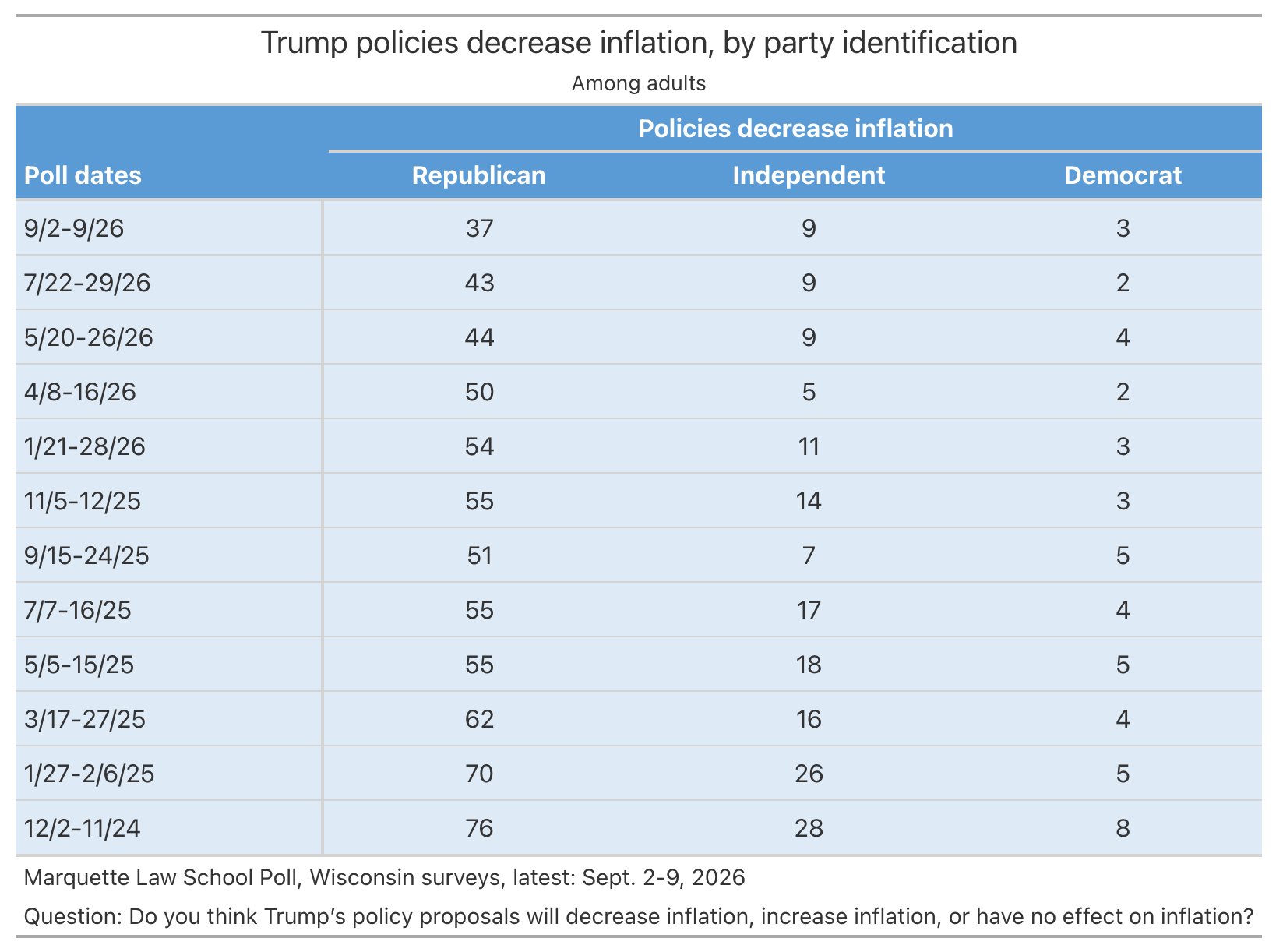
There has been an especially striking change over the second term among Republicans in their belief whether Trump’s policies will decrease inflation. In December 2024, shortly after his reelection and before taking office, 76% of Republicans thought Trump’s policies would lower inflation. That percentage has fallen by more than half, to just 37% of Republicans who now think the president’s policies are reducing inflation. Among independents, only 28% thought Trump would lower inflation just after his election, but that, too, has fallen to 9% as of September. Democrats scarcely expected Trump to decrease inflation, declining from 8% to 3% now.
Most important issues
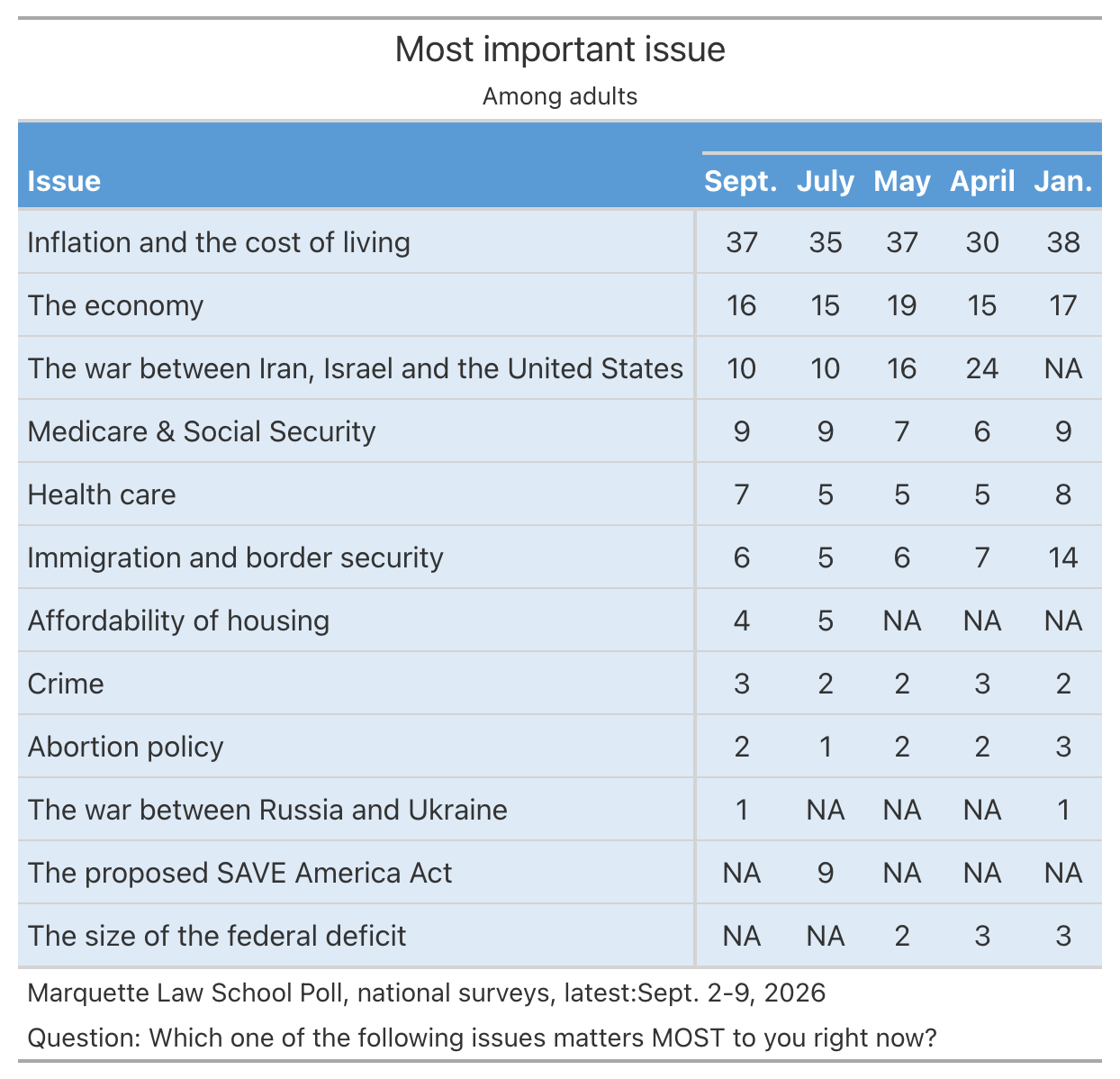
Inflation remains by far the most important issue for Americans, with 37% ranking it first among 10 issues considered in the September poll. The second-highest-rated issue is the economy, at 16%, followed by the war with Iran at 10%. The high ranking of inflation has been steady throughout the year, and by a large margin in each survey. Concern over the war with Iran has declined from 24% in April to 10% as of September, while the importance of most other issues has remained relatively stable. The importance of issues, and the changes over the year, are shown in the table.
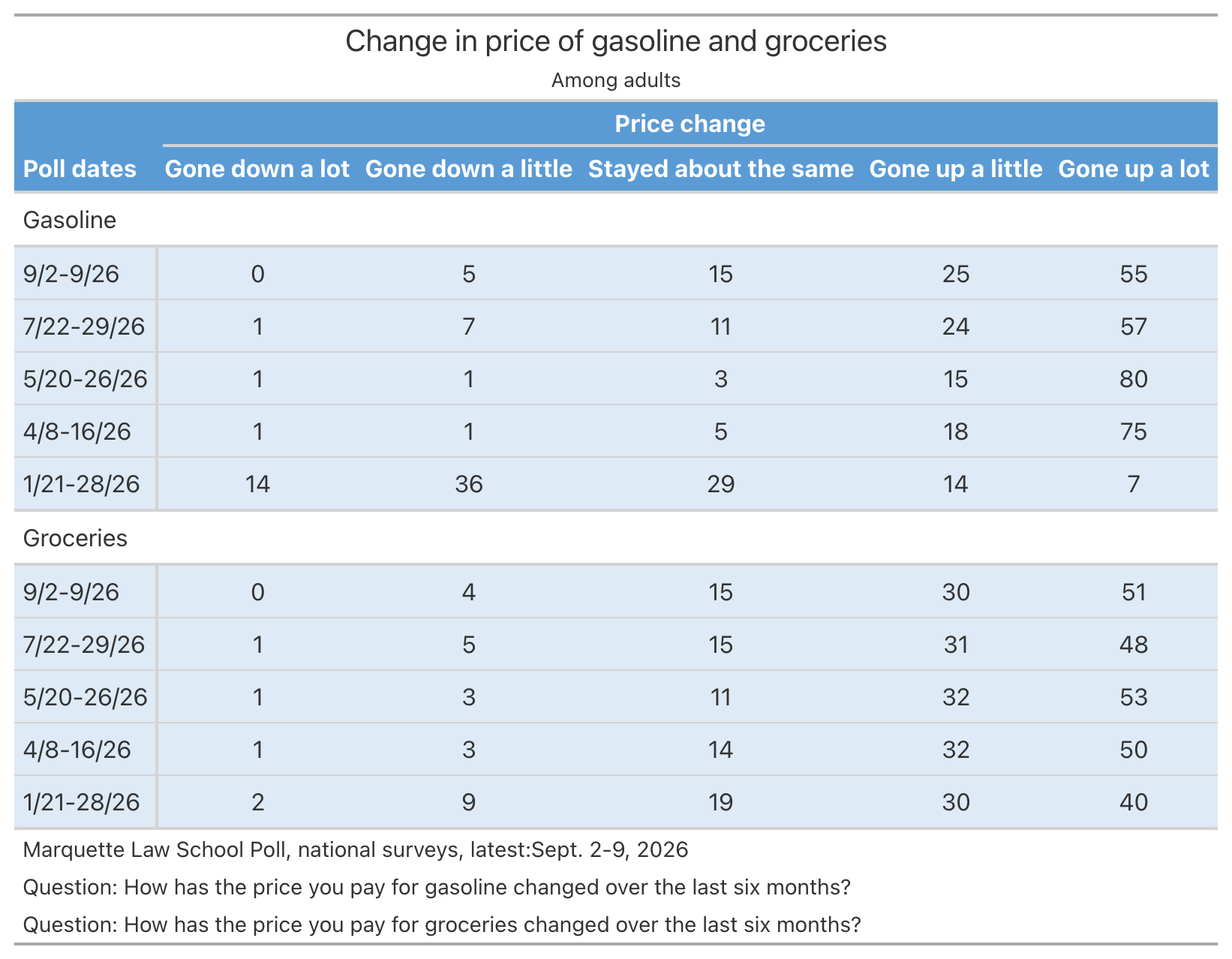
Gasoline prices rose sharply with the start of the Iran war, and Americans are vividly aware of the change. In January, prior to the war beginning on Feb. 28, half of adults said gas prices had declined at least a little over the previous six months, a bright spot for the cost of living. In contrast, in May, 80% had said gas prices were up lot, and 95% said up a little or a lot. That sense of substantial increases has lessened somewhat as of September, with 15% saying prices have been about the same over the last six months, and 5% saying they have gone down a little. Yet 80% say gas prices have risen over the last six months since the start of the Iran war.
Grocery prices are also seen as rising, but more consistently over the year than for gas prices. As of September, 81% say their bill at the checkout counter is higher than six months ago, up from 70% in January. This consistent pressure on grocery prices is a clear source of concern over the cost of living, beyond the recent surge in gas prices.
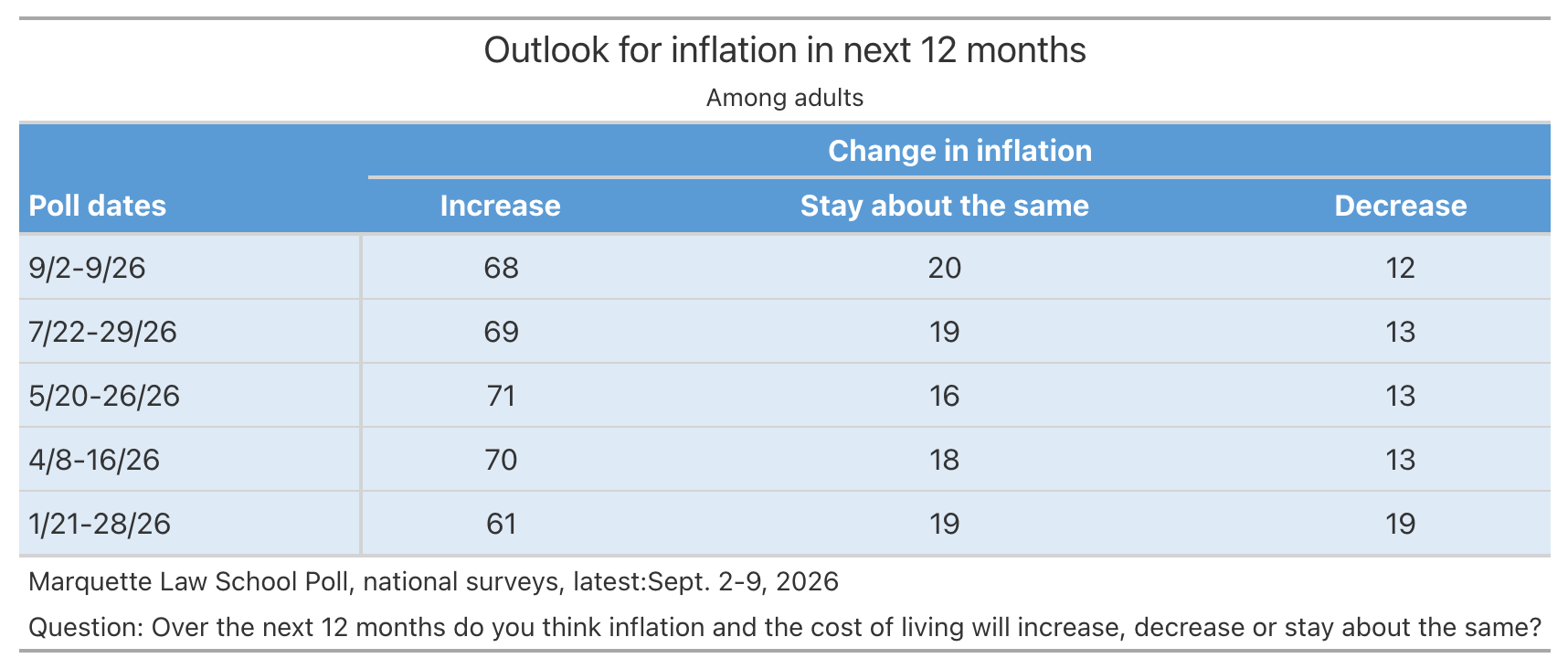
Adults are also pessimistic about the course of inflation over the next 12 months, as 68% say inflation will increase in the next year. Only 12% are expecting a decrease, and 20% are expecting to see no change. This is a somewhat more negative outlook than in January, when 61% thought inflation would increase over the year.
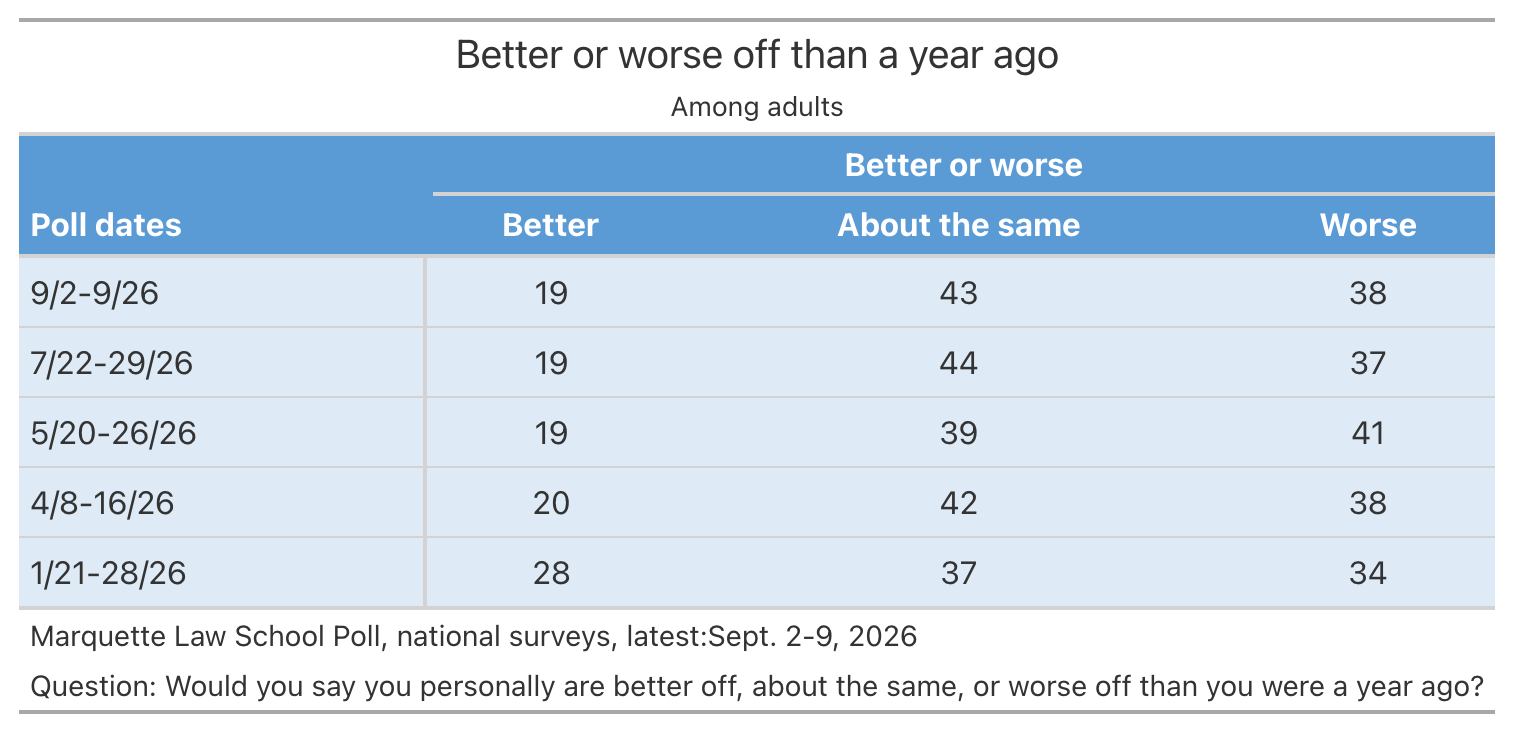
More people say they are worse off than a year ago, 38%, than say they are better off, 19%, while 43% say they are about the same as a year ago. This two-to-one ratio of worse-to-better is a considerable shift from January, when 28% said they were better off and 34% said worse off.
Iran war
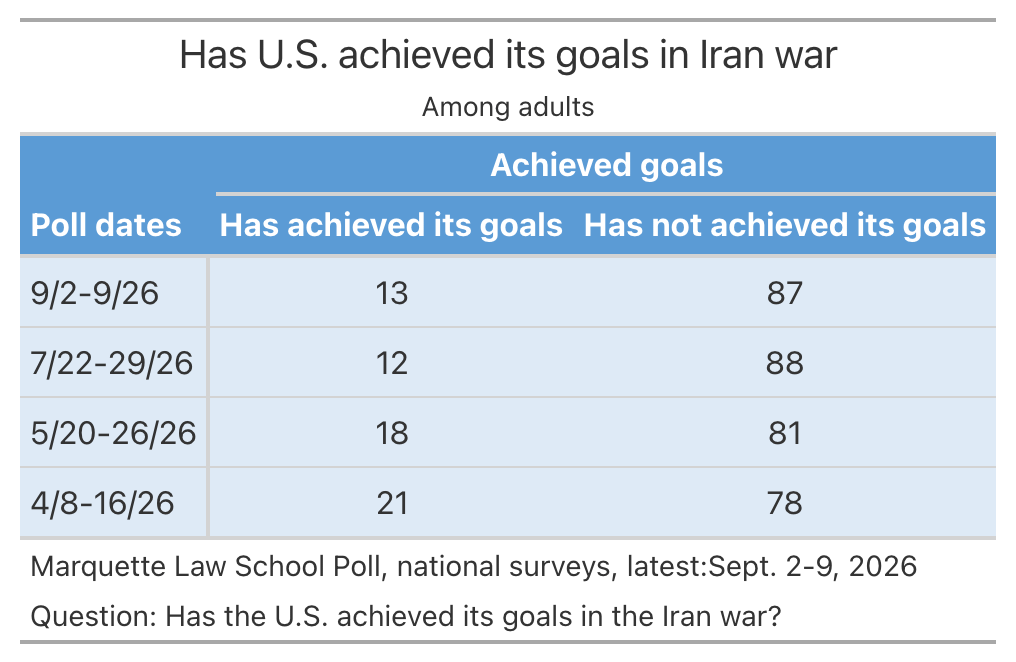
The public remains very doubtful that the United States has achieved its goals in the Iran war, with just 13% saying the goals have been reached and 87% saying they have not been achieved. This is down from 21% in April who thought the goals had been achieved.
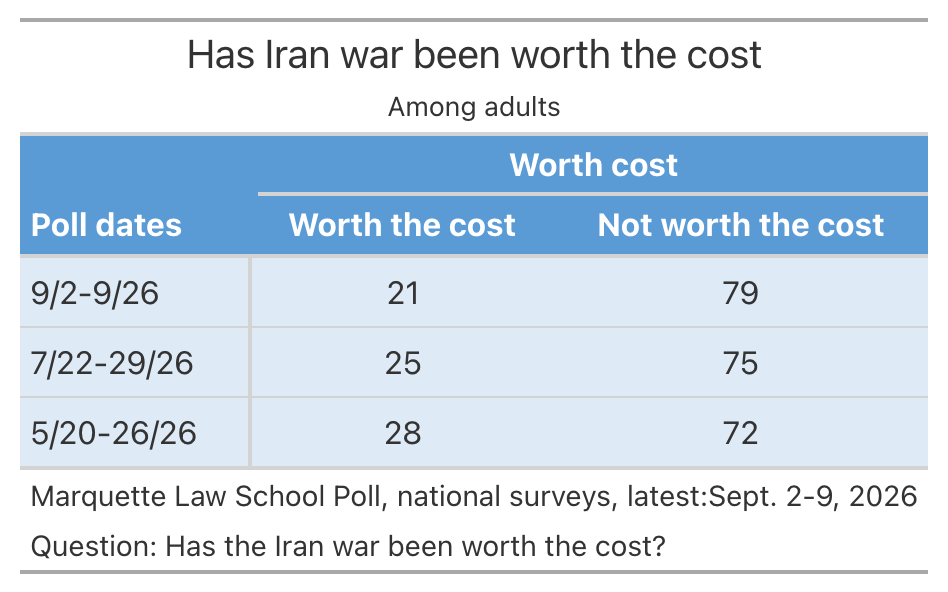
One in five, 21%, say the Iran war has been worth the cost, down from 28% who said so in May.
Concluding note
President Trump’s job approval, and views of the economy, provide a bleak outlook for Republicans in the November elections. While the size of the seat swings in Congress may be limited by the reduction in the number of competitive seats since 2010, the national forces of presidential approval, the cost of living and the economy as the most important issues, and the gloomy feelings about the economic outlook, are a heavy burden for Republicans. Democrats have an opportunity, IF they can capitalize on these negative views.